
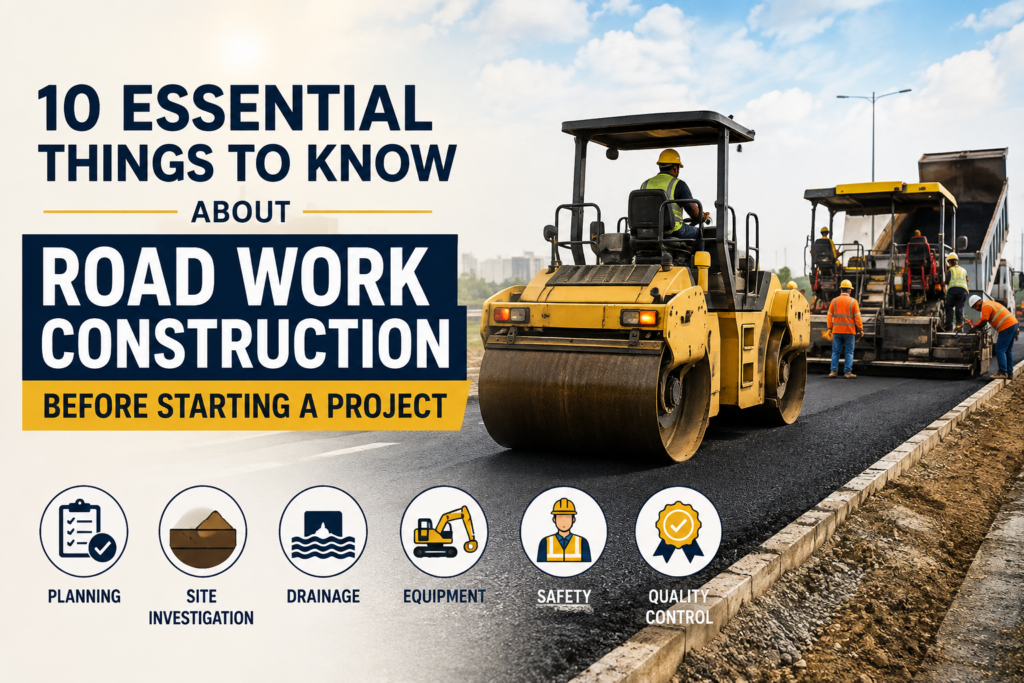
Road construction is a major infrastructure activity that requires careful planning, technical expertise, quality materials, and proper execution. Whether the project involves a new highway, urban road, industrial access road, rural route, or road widening, the decisions made before construction begins can significantly affect the project’s cost, durability, safety, and completion time.
In India, road work construction can be particularly challenging because projects must often deal with varying soil conditions, monsoon rainfall, heavy traffic, utility networks, and different types of terrain.
Before breaking ground, project owners and contractors should understand the key factors that influence successful road construction. Here are 10 essential things to know before starting a road work construction project.
1. Why Is Proper Road Construction Planning Important?
Planning is the foundation of every successful road construction project. A detailed plan helps identify potential challenges before construction begins and ensures that resources are used efficiently.
The planning stage should cover:
- Project objectives and scope
- Road alignment and design
- Construction timeline
- Estimated budget
- Material requirements
- Equipment and machinery
- Labour requirements
- Safety measures
- Environmental considerations
A well-prepared construction plan also helps contractors coordinate different activities, from excavation and earthwork to drainage, pavement construction, and finishing.
Without proper planning, projects can experience cost overruns, delays, material wastage, and quality problems.
2. How Does Site Investigation Affect Road Construction?
A detailed site investigation is essential before beginning road work construction. The ground conditions beneath a road directly influence its stability and long-term performance.
Engineers generally assess factors such as:
- Soil type and bearing capacity
- Groundwater conditions
- Existing pavement condition
- Terrain and slope
- Drainage patterns
- Geological conditions
- Existing structures and utilities
Soil testing is particularly important because weak or expansive soil may require additional treatment before pavement construction.
Understanding the site early allows engineers to select suitable construction methods and pavement designs while reducing the risk of future failures.
3. Why Is Road Alignment and Design Important?
Road alignment determines how the road travels across the landscape. It includes horizontal alignment, vertical alignment, curves, gradients, intersections, and other design elements.
A suitable alignment should balance:
- Safety
- Traffic requirements
- Land availability
- Construction cost
- Drainage
- Environmental impact
- Future expansion
Poor alignment can increase construction costs and create safety problems for motorists. Road geometry must therefore be designed according to the expected traffic volume, vehicle types, terrain, and applicable engineering standards.
For larger infrastructure projects, detailed surveying and engineering analysis should be completed before finalising the road design.
4. What Role Does Drainage Play in Road Work Construction?
Water is one of the biggest threats to road durability. Poor drainage can cause waterlogging, erosion, potholes, pavement cracking, and weakening of the subgrade.
This is especially important in India because many regions experience intense seasonal rainfall during the monsoon.
A road drainage system may include:
- Side drains
- Culverts
- Stormwater channels
- Cross-drainage structures
- Catch basins
- Roadside drainage systems
The drainage design should allow rainwater to move away from the road efficiently without damaging the pavement or surrounding land.
A strong pavement combined with poor drainage can still fail prematurely. Therefore, drainage should be considered an integral part of road construction rather than an afterthought.
5. How Should Construction Materials Be Selected?
The quality of materials directly affects road performance and service life. Materials should be selected according to the road design, traffic conditions, climate, soil characteristics, and applicable specifications.
Common materials used in road construction include:
- Soil and selected earth materials
- Aggregates
- Granular sub-base materials
- Cement
- Bitumen
- Concrete
- Geosynthetic materials
- Stabilisation materials
Aggregates should have appropriate strength, durability, grading, and cleanliness. Similarly, bituminous materials must be selected according to the pavement design and expected service conditions.
Using low-quality or unsuitable materials may reduce the initial cost but can increase maintenance expenses significantly over the road’s lifespan.
6. What Construction Equipment Is Required for Road Projects?
Road work construction involves multiple activities, and choosing the right machinery can improve productivity, accuracy, and project efficiency.
Depending on the project’s scale and requirements, equipment may include:
- Excavators
- Motor graders
- Wheel loaders
- Dump trucks
- Soil compactors
- Vibratory rollers
- Asphalt pavers
- Milling machines
- Concrete equipment
- Water tankers
Each machine has a specific role. For example, graders help achieve accurate levels and slopes, while rollers provide the required compaction of soil and pavement layers.
Equipment availability and maintenance should be considered during project planning. Machinery breakdowns can interrupt construction schedules and increase operating costs.
7. Why Is Proper Compaction Important in Road Construction?
Compaction is one of the most important steps in road work construction. It increases the density and strength of soil and granular materials while reducing unwanted air voids.
Proper compaction helps improve:
- Load-bearing capacity
- Pavement stability
- Settlement resistance
- Surface durability
- Overall road life
Each pavement layer must achieve the required level of compaction before the next layer is placed.
Insufficient compaction can result in settlement, deformation, cracking, rutting, and premature pavement failure. Contractors should therefore use suitable compaction equipment and conduct appropriate quality-control tests throughout the project.
8. How Do Weather Conditions Affect Road Work Construction?
Weather can have a significant impact on construction schedules and pavement quality.
In India, road projects must often account for extreme heat, heavy rainfall, humidity, and seasonal weather variations.
For example, excessive rainfall can affect:
- Earthwork
- Soil compaction
- Excavation
- Drainage
- Material transportation
- Asphalt operations
- Concrete work
Construction schedules should therefore consider local weather patterns. During the monsoon, proper water management and site protection become particularly important.
Planning weather-sensitive activities carefully can reduce delays and prevent quality issues.
9. What Safety Measures Are Necessary During Road Construction?
Road construction sites can expose workers, motorists, pedestrians, and nearby communities to various hazards. Safety planning should begin before construction activities start.
Important measures include:
- Proper warning signs
- Traffic diversion plans
- Barricades and cones
- Personal protective equipment
- Safe equipment operation
- Adequate site lighting
- Worker training
- Emergency procedures
- Regular safety inspections
Traffic management is especially important when construction takes place on an existing road.
Clear signage and well-planned diversions can help reduce accidents while allowing construction activities to continue efficiently.
10. How Important Is Quality Control in Road Work Construction?
Quality control should be maintained throughout the entire construction process rather than being performed only after the project is completed.
Quality checks may cover:
- Soil properties
- Aggregate quality
- Material grading
- Layer thickness
- Moisture content
- Compaction
- Pavement levels
- Surface finishing
- Drainage structures
Regular testing helps identify problems at an early stage. Correcting a defect during construction is generally easier and less expensive than repairing a failed road after completion.
Documentation is also important. Test reports, inspection records, material certificates, and construction measurements can help verify that the project has been executed according to the required specifications.
What Common Mistakes Should You Avoid Before Starting Road Construction?
Even well-planned projects can face difficulties when important details are overlooked. Some common mistakes include:
Ignoring Soil Conditions
Starting construction without understanding the subgrade can result in structural problems later.
Underestimating Drainage Requirements
Inadequate drainage is a common cause of pavement deterioration, particularly in areas exposed to heavy rainfall.
Choosing Equipment Only on the Basis of Cost
Low-cost or unsuitable machinery may reduce initial expenses but can lower productivity and increase downtime.
Poor Traffic Planning
Construction on busy roads requires carefully planned traffic diversions and safety measures.
Skipping Quality Checks
Small quality issues can become expensive structural failures if they are not identified early.
How Can Road Construction Projects Be More Efficient?
Efficiency begins with proper coordination between design, materials, machinery, manpower, and project management.
Some practical approaches include:
- Completing site investigations before construction
- Preparing realistic project schedules
- Selecting suitable construction equipment
- Maintaining machinery regularly
- Establishing quality-control procedures
- Planning material deliveries
- Monitoring work progress
- Maintaining effective drainage
- Training workers in safety procedures
- Preparing contingency plans for weather and site-related challenges
Digital project monitoring, modern surveying technologies, and efficient construction equipment can also help improve accuracy and productivity.
What Should You Check Before Starting a Road Work Construction Project?
Before construction begins, project teams should review a comprehensive checklist:
Planning: Is the project scope clearly defined?
Survey: Has the site been properly surveyed?
Soil: Have soil and subgrade conditions been evaluated?
Design: Is the road design suitable for expected traffic and terrain?
Drainage: Has adequate water management been incorporated?
Materials: Are suitable and tested construction materials available?
Machinery: Is the required equipment available and maintained?
Safety: Is a traffic and worker safety plan in place?
Quality: Are testing and inspection procedures established?
Budget: Is there sufficient financial and contingency planning?
Addressing these points before construction begins can significantly improve project efficiency and reduce avoidable problems.
Conclusion
Successful road work construction depends on much more than laying asphalt or concrete. Proper planning, site investigation, road design, drainage, material selection, equipment, compaction, weather management, safety, and quality control all contribute to building roads that are durable, safe, and capable of handling long-term traffic demands.
For infrastructure projects where reliability and efficient execution matter, working with an experienced infrastructure solutions provider can make a significant difference. EVCO supports infrastructure development with solutions designed around the practical requirements of modern construction projects, helping businesses and project teams approach infrastructure work with greater efficiency and reliability.
By understanding these 10 essential considerations before starting a road construction project, stakeholders can make better decisions, minimise risks, control costs, and build infrastructure that performs effectively for years to come.