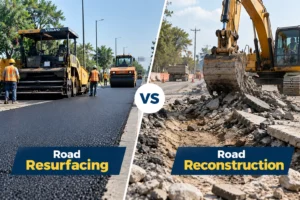
Road construction projects require careful planning, skilled workers, quality materials, and reliable equipment to achieve the desired results. From preparing the ground to laying asphalt and compacting surfaces, every stage requires the right machinery to ensure smooth and efficient operations. Without suitable equipment, construction teams may face delays, increased labour costs, material wastage, and inconsistent road quality.
Modern Road Work Construction machinery helps contractors complete projects faster, improve accuracy, and manage resources more effectively. Equipment such as motor graders, road rollers, pavers, excavators, and batching plants plays an important role in improving productivity across different stages of road development.
Understanding how these machines contribute to construction efficiency can help contractors and project managers make better equipment decisions.
What Is the Role of Machinery in Road Construction?
Road construction machinery is designed to perform specific tasks that would otherwise require considerable manual labour and time. These machines help prepare the construction site, move earth, transport materials, create smooth surfaces, and compact road layers.
For example, excavators remove soil and unwanted materials, motor graders create an even surface, and road rollers compact soil and asphalt to achieve the required density.
Using appropriate machinery allows construction teams to handle demanding tasks with greater consistency. It also helps coordinate different activities, making it easier to complete projects according to planned schedules.
How Does Road Construction Machinery Improve Project Productivity?
1. Speeds Up Construction Activities
One of the main advantages of modern construction equipment is its ability to complete heavy tasks in less time. Manual methods can be slow, particularly when working on highways, urban roads, industrial areas, and large infrastructure projects.
Excavators can move substantial quantities of earth, while loaders help transport materials across the site. Asphalt pavers distribute paving materials efficiently, reducing the time required to create road surfaces.
Faster operations allow contractors to complete more work within the same working hours. When equipment is selected according to project requirements, it can significantly improve overall workflow.
2. Reduces Dependence on Manual Labour
Road construction involves physically demanding activities, including digging, material handling, levelling, and compacting. Relying heavily on manual methods can increase the workload and slow down project execution.
Construction machinery automates many of these activities, allowing workers to focus on supervision, quality checks, equipment operation, and coordination.
For instance, a motor grader can level a large area more efficiently than manual levelling methods. Similarly, mechanical compactors help achieve consistent compaction across extensive road surfaces.
Although trained operators and labourers remain essential, the right equipment helps teams complete more work with better resource utilisation.
3. Improves Road Surface Quality and Accuracy
Road quality depends on accurate grading, proper material distribution, and adequate compaction. Uneven surfaces or insufficient compaction can lead to cracks, water accumulation, premature deterioration, and expensive repairs.
Machinery such as motor graders and asphalt pavers helps create uniform road surfaces. Road rollers compact different layers to achieve the required density and stability.
Modern equipment may also include automated controls, sensors, and grade-guidance systems that help operators maintain the required levels and dimensions.
Improved accuracy reduces construction errors and rework, helping contractors maintain quality standards while using materials more efficiently.
4. Helps Reduce Project Costs
Construction costs include labour, fuel, equipment operation, materials, maintenance, and project delays. Choosing suitable machinery can help control several of these expenses.
Efficient equipment reduces the time required for repetitive tasks and can minimise unnecessary material movement. Accurate grading and paving may also reduce wastage and the need for corrective work.
For example, a properly selected loader can move aggregates efficiently, while suitable compaction equipment helps achieve the specified density without unnecessary additional passes.
However, cost savings depend on factors such as machine capacity, fuel consumption, maintenance requirements, operator skills, and the number of working hours. Contractors should evaluate the total operating cost rather than selecting equipment based on purchase price alone.
5. Minimises Project Delays
Road construction schedules can be affected by equipment breakdowns, slow material handling, poor site coordination, and unexpected ground conditions.
Reliable machinery helps reduce avoidable delays by supporting consistent work progress. When the right equipment is available at each stage, teams can coordinate earthwork, grading, material supply, paving, and compaction more effectively.
Preventive maintenance is equally important. Regular inspections, timely servicing, and replacing worn components can reduce unexpected breakdowns.
Contractors should also plan equipment availability in advance, especially for projects with strict completion deadlines or limited working windows.
6. Improves Worker Safety
Road construction sites involve moving vehicles, heavy loads, uneven ground, and equipment operating in confined areas. Appropriate machinery can reduce workers’ exposure to certain physically demanding and hazardous tasks.
For example, mechanical lifting equipment can help handle heavy materials, while machines designed for earthmoving can reduce the need for workers to enter unstable excavation areas.
However, machinery must be operated by trained personnel and maintained according to manufacturer recommendations. Proper traffic management, protective equipment, safety barriers, and clear communication are also essential.
When equipment is used correctly, it can support safer working practices while maintaining productivity.
7. Supports Large-Scale Infrastructure Projects
Highways, expressways, industrial roads, and urban infrastructure projects often require substantial earthmoving, material production, paving, and compaction.
Manual techniques alone cannot efficiently manage the scale and pace of many such projects. Heavy-duty construction machinery enables contractors to handle larger workloads and coordinate multiple activities across extensive sites.
Equipment such as batching plants, concrete mixers, pavers, loaders, and road rollers supports different construction requirements.
Selecting machinery based on road width, terrain, soil conditions, project duration, and material requirements helps contractors manage complex projects more effectively.
Which Machines Are Essential for Productive Road Construction?
Different machines contribute to different stages of road development. The most suitable selection depends on the project’s specifications and working conditions.
Excavators: Used for digging, trenching, removing soil, and preparing construction areas.
Wheel Loaders: Help load and transport aggregates, soil, and other construction materials.
Motor Graders: Create smooth, level surfaces and prepare road foundations.
Road Rollers: Compact soil, granular layers, and asphalt to achieve the required density.
Asphalt Pavers: Distribute asphalt mixtures evenly across the road surface.
Concrete Batching Plants: Produce concrete in controlled quantities for projects involving concrete roads and related infrastructure.
Transit Mixers and Concrete Mixers: Support the transportation or preparation of concrete, depending on the equipment type and project requirements.
Using these machines in a coordinated sequence helps prevent bottlenecks and maintain steady progress throughout the construction process.
How Can Contractors Choose the Right Road Construction Machinery?
Selecting the right machinery is essential for achieving productivity without unnecessary operating expenses. Contractors should consider several factors before purchasing or renting equipment.
- Project requirements: Identify the type of road, expected workload, construction methods, and completion timeline.
- Machine capacity: Ensure the equipment can handle the required volume of materials and workload.
- Site conditions: Consider soil type, terrain, available working space, and accessibility.
- Fuel efficiency: Compare expected fuel consumption and operating costs.
- Maintenance and service: Check spare-part availability, servicing requirements, and technical support.
- Operator training: Ensure workers have the skills and qualifications required to operate the equipment safely.
- Equipment reliability: Review build quality, durability, and suitability for the intended application.
Contractors should also consider whether renting or purchasing machinery is more practical. Renting may suit short-term projects, while purchasing can be beneficial when equipment will be used regularly across multiple sites.
How Does Equipment Maintenance Affect Productivity?
Even high-quality machinery can reduce productivity if it is not maintained properly. Worn parts, hydraulic problems, engine issues, and neglected servicing can cause breakdowns that interrupt construction activities.
A planned maintenance schedule helps identify potential problems before they affect project operations. Operators should inspect essential components, monitor fluid levels, clean equipment where necessary, and report unusual performance.
Keeping maintenance records can also help project managers plan servicing and avoid scheduling critical work when equipment is unavailable.
Well-maintained machinery generally supports more reliable operations, better workplace safety, and longer equipment service life.
Conclusion
Road construction machinery plays a vital role in improving project productivity by speeding up operations, reducing manual effort, improving surface quality, controlling costs, and minimising delays. From excavation and grading to paving and compaction, every machine contributes to a specific stage of the construction process. Selecting suitable equipment, maintaining it regularly, and ensuring proper operation can help contractors achieve better results and complete projects more efficiently.
As infrastructure development continues to grow, investing in reliable equipment and effective construction practices becomes increasingly important. EVCO supports the road construction and infrastructure sector with equipment solutions designed for demanding construction applications. Choosing the right machinery for each project can help contractors improve efficiency, maintain quality, and achieve their Road Work Construction goals.