Road Construction plays an essential role in developing a country’s infrastructure, improving transportation, and connecting cities, towns, and rural areas. Well-developed roads make travelling easier, support business operations, improve connectivity, and contribute to economic growth.
With advancements in engineering, technology, and construction materials, modern Road Construction projects are becoming more efficient, durable, and environmentally responsible.
Whether it is a highway, expressway, city road, or rural road, quality construction is important for ensuring safe and smooth transportation.
What Is Road Construction?
Road Construction is the process of planning, designing, developing, and building roads for vehicles, pedestrians, and other transportation requirements.
It involves several activities, including land surveying, soil testing, site preparation, excavation, laying construction materials, asphalt or concrete paving, and final road finishing.
The primary objective of Road Construction is to create strong, safe, and long-lasting road infrastructure that meets transportation needs.
Importance of Road Construction
Road infrastructure is an important part of economic and social development. Properly constructed roads offer several benefits:
1. Improved Transportation and Connectivity
Well-developed roads connect cities, villages, industrial areas, and commercial locations, making transportation faster and more convenient.
2. Economic Development
Quality road infrastructure supports trade, tourism, agriculture, and industrial activities by improving the movement of goods and services.
3. Enhanced Road Safety
Proper road design, drainage systems, road markings, signboards, and quality materials help create safer driving conditions.
4. Better Accessibility
Road development improves access to schools, hospitals, workplaces, markets, and other essential services.
5. Reduced Travel Time
Well-planned roads and highways can improve traffic movement, reduce travel delays, and support efficient transportation.
Key Stages of the Road Construction Process
A successful Road Construction project involves multiple stages to ensure quality, durability, and safety.
1. Planning and Site Survey
The first stage involves identifying the project location, understanding traffic requirements, conducting land surveys, and evaluating the construction site.
2. Soil Testing and Ground Preparation
Soil testing helps determine the strength and stability of the ground. The site is then cleared, levelled, and prepared for construction.
3. Earthwork and Excavation
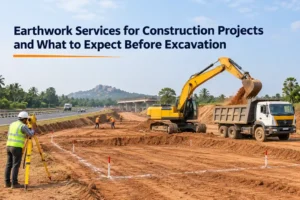
Excavation and earthwork activities help achieve the required road alignment, elevation, and foundation level.
4. Subgrade Preparation
The subgrade is the prepared natural soil layer that supports the road structure. Proper compaction helps provide a stable foundation.
5. Base and Sub-Base Construction
Layers of suitable aggregates and other approved materials are placed and compacted to distribute traffic loads and strengthen the road structure.
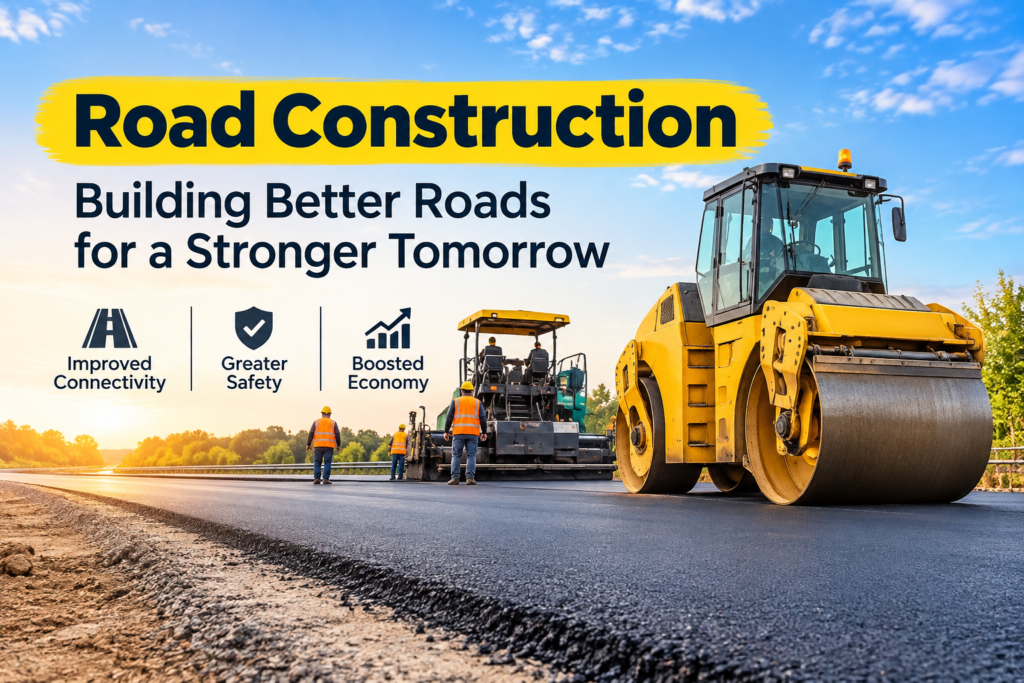
6. Asphalt or Concrete Paving
Depending on the project requirements, asphalt or concrete is used to create the road surface. Proper laying and finishing improve durability and driving comfort.
7. Road Marking and Signage
The final stage includes lane markings, traffic signs, safety barriers, and other road-safety features.
Types of Road Construction
Different types of roads are developed according to traffic requirements, geographical conditions, and project objectives.
- Asphalt Roads: Commonly used for highways, city roads, and other transportation routes.
- Concrete Roads: Known for their strength and durability, particularly in areas with heavy traffic.
- Gravel Roads: Often used in rural and low-traffic areas.
- Flexible Pavement Roads: Designed with multiple layers that distribute vehicle loads.
- Rigid Pavement Roads: Constructed using concrete slabs to provide a strong and stable surface.
Modern Technologies Used in Road Construction
Technology has improved the way roads are designed, developed, and maintained.
Some commonly used technologies include:
- GPS-based surveying and road alignment.
- Advanced road construction machinery.
- Automated asphalt paving equipment.
- Drone-based site monitoring.
- Digital project planning and monitoring.
- Recycled construction materials.
- Modern quality testing and compaction equipment.
These technologies help improve construction accuracy, project efficiency, and quality management.
Challenges in Road Construction
Despite technological advancements, construction projects may face several challenges:
- Unfavourable weather conditions.
- Land acquisition and site clearance.
- Soil instability and drainage issues.
- Increasing construction material costs.
- Traffic management during construction.
- Environmental impact and resource management.
Proper planning, engineering expertise, and quality control are important to overcome these challenges.