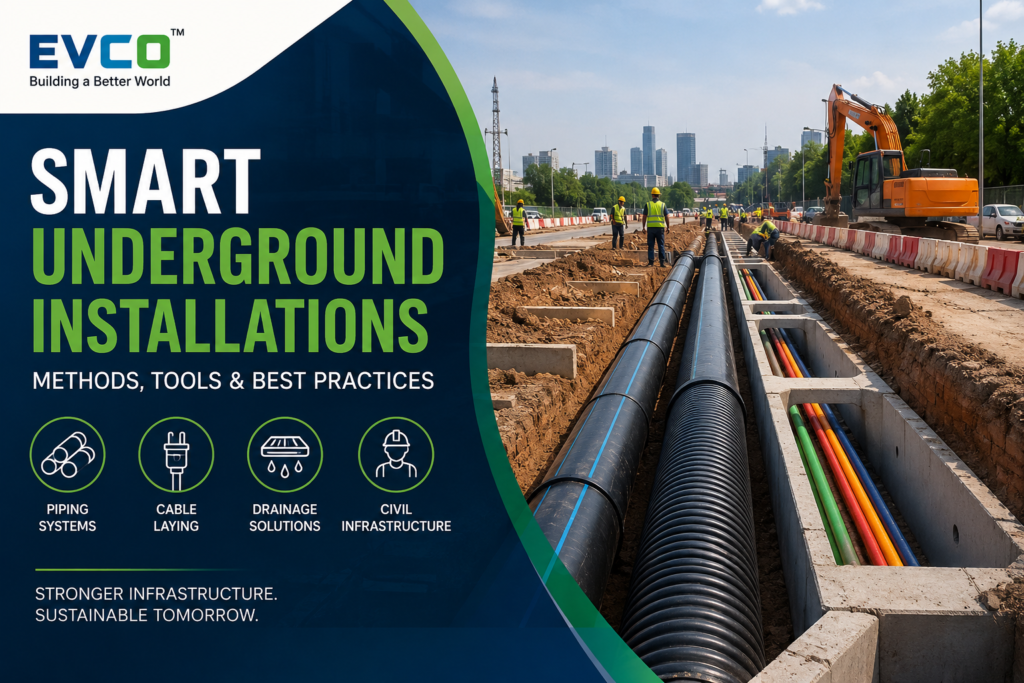
India’s infrastructure sector is evolving rapidly. From smart cities and industrial corridors to metro rail projects and renewable energy parks, the demand for reliable underground infrastructure has increased significantly over the last decade. Modern construction now depends heavily on efficient underground drainage systems, cable laying networks, industrial piping systems, and durable civil infrastructure solutions.
As urbanization accelerates, contractors and infrastructure developers are prioritizing smarter Underground Services Installation methods that improve durability, reduce maintenance costs, and support sustainable development. Whether it is underground utility pipelines, stormwater drainage systems, or power cable installations, precision and material quality play a critical role in long-term project success.
Why is Underground Services Installation important in modern infrastructure?
Underground infrastructure forms the foundation of every modern city and industrial facility. Water pipelines, drainage systems, telecom cables, electrical networks, and sewage systems all depend on proper underground installation practices.
Without reliable underground systems, cities face several operational challenges, including:
- Water leakage and pipe failure
- Cable damage and power disruptions
- Urban flooding during monsoons
- High maintenance costs
- Traffic disruptions caused by repairs
- Environmental and public safety risks
India’s rapid urban expansion has made underground utility planning more important than ever. Smart infrastructure projects now focus on building durable underground systems that can handle heavy usage, changing weather conditions, and long-term operational demands.
What are the main components of Underground Services Installation?
Modern underground construction projects involve several interconnected infrastructure systems.
Underground piping systems
Piping systems are essential for transporting water, chemicals, industrial fluids, and wastewater safely underground.
Common applications include:
- Municipal water supply projects
- Industrial processing plants
- Sewage and wastewater treatment systems
- Agricultural irrigation infrastructure
- Fire safety systems
Popular piping materials used in India include:
- HDPE pipes
- PVC pipes
- DWC pipes
- RCC pipes
- Steel piping systems
HDPE and DWC pipes are increasingly preferred because they offer flexibility, corrosion resistance, and longer service life in demanding underground conditions.
Underground cable laying solutions
Modern cities and industries require reliable underground electrical and communication networks.
Underground cable laying is widely used for:
- Power transmission systems
- Smart city infrastructure
- Metro rail projects
- Fiber optic networks
- Renewable energy installations
Proper cable protection systems, ducting, and trench planning help prevent future damage and ensure uninterrupted operations.
Drainage and stormwater systems
Urban flooding has become a major concern in Indian cities due to rapid urbanization and changing rainfall patterns.
Efficient underground drainage systems help:
- Improve stormwater management
- Reduce waterlogging
- Protect roads and structures
- Prevent soil erosion
- Support sustainable urban development
At EVCO, we provide high-performance drainage and underground utility solutions designed for long-term durability and efficient infrastructure management.
How do modern installation methods improve underground infrastructure?
Traditional excavation methods are gradually being replaced with advanced technologies that improve efficiency, safety, and environmental sustainability.
Trenchless technology
Trenchless installation methods allow contractors to install underground utilities with minimal surface disruption.
Common trenchless methods include:
- Horizontal Directional Drilling (HDD)
- Pipe jacking
- Microtunneling
- Pipe bursting
Benefits of trenchless construction include:
- Faster project completion
- Reduced traffic disruption
- Lower restoration costs
- Improved installation accuracy
- Minimal environmental impact
This technology is now widely used in urban infrastructure, telecom projects, and industrial utility installations across India.
Smart surveying and mapping
Accurate underground mapping is essential before excavation begins.
Modern surveying technologies include:
- Ground Penetrating Radar (GPR)
- GIS mapping systems
- GPS utility tracking
- Drone-based infrastructure surveys
These tools help contractors avoid accidental utility damage and improve project planning efficiency.
Modular underground systems
Prefabricated underground components are becoming increasingly popular in large-scale infrastructure projects.
Modular systems help improve:
- Installation speed
- Quality consistency
- Project scalability
- Labor efficiency
- Maintenance accessibility
Modular drainage chambers, utility ducts, and pipe support systems are widely used in industrial and smart city projects.
How does EVCO ensure high-quality installation materials and services?
Material quality is one of the most important factors in successful Underground Services Installation projects.
At EVCO, we focus on supplying durable and innovative underground infrastructure products tailored for India’s industrial and construction sectors. Our solutions are designed to meet the needs of contractors, infrastructure developers, municipal authorities, and distributors looking for long-lasting performance and operational reliability.
EVCO supports infrastructure projects through:
- Premium underground construction materials
- Durable piping and drainage systems
- Industrial-grade utility installation products
- Reliable civil construction solutions
- Technical support for infrastructure applications
- High-performance products for export markets
Our commitment to quality and innovation helps clients reduce maintenance costs while improving long-term infrastructure efficiency.
What are the best practices for underground piping and drainage systems?
Successful underground infrastructure projects depend on proper planning, installation, and maintenance practices.
Conduct proper soil analysis
Soil conditions directly affect underground system performance.
Before installation, engineers should evaluate:
- Soil strength
- Moisture content
- Corrosion risks
- Groundwater levels
- Load-bearing capacity
This helps determine the right materials and installation techniques for the project.
Design trenches correctly
Improper trenching can lead to pipe movement, structural failure, and water leakage.
Best trenching practices include:
- Proper trench depth and width
- Stable bedding support
- Controlled backfilling
- Adequate soil compaction
- Safe excavation slopes
Use corrosion-resistant materials
Underground systems are constantly exposed to moisture, chemicals, and soil pressure.
Corrosion-resistant materials such as HDPE and advanced polymer systems provide:
- Longer lifespan
- Lower maintenance requirements
- Better flexibility
- Improved chemical resistance
- Higher durability in harsh environments
Perform routine inspections
Regular inspections help identify issues before they become major infrastructure failures.
Modern inspection techniques include:
- CCTV pipeline inspections
- Leak detection systems
- Sensor-based monitoring
- Predictive maintenance technologies
Preventive maintenance significantly improves system reliability and operational efficiency.
How are eco-friendly construction materials transforming underground infrastructure?
Sustainability has become a major priority in India’s infrastructure sector.
Government infrastructure projects and industrial developers are increasingly adopting eco-friendly construction materials that reduce environmental impact while improving long-term performance.
Sustainable underground infrastructure solutions offer several benefits:
- Reduced carbon footprint
- Improved recyclability
- Lower environmental damage
- Better water management
- Longer service life
Recyclable HDPE pipes, permeable drainage systems, and energy-efficient manufacturing practices are helping modern infrastructure projects achieve sustainability goals.
At EVCO, we believe sustainable construction materials and innovative underground solutions are essential for building future-ready infrastructure in India and global markets.
Which industries rely heavily on underground infrastructure solutions?
Several industries depend on reliable underground utility systems for daily operations and long-term infrastructure development.
Industrial manufacturing
Factories require underground systems for:
- Water distribution
- Chemical transportation
- Electrical infrastructure
- Fire protection systems
Smart city projects
Smart cities depend on integrated underground networks for efficient urban management and uninterrupted utility services.
Renewable energy infrastructure
Solar and wind energy projects require secure underground cable networks for safe power transmission.
Transportation infrastructure
Roads, airports, railways, and metro systems rely on underground drainage and utility systems for operational stability.
Telecom and data infrastructure
The growth of digital infrastructure and fiber optic networks has increased demand for advanced underground cable laying systems.
What challenges affect Underground Services Installation in India?
Despite rapid infrastructure growth, underground construction projects still face several operational challenges.
Urban congestion
Dense urban areas make excavation and utility coordination more complex.
Monsoon-related infrastructure damage
Heavy rainfall often causes flooding, drainage overload, and soil erosion.
Rising construction costs
Material price fluctuations and labor shortages impact project budgets and timelines.
Utility mapping issues
Incomplete underground utility records increase the risk of accidental cable and pipeline damage during excavation.
Environmental regulations
Infrastructure companies must now comply with stricter sustainability and environmental standards.
To overcome these challenges, contractors increasingly rely on advanced technologies, durable materials, and experienced infrastructure solution providers.
Why is India becoming a major hub for underground infrastructure solutions?
India’s construction and infrastructure industry is experiencing strong domestic and international demand.
Government investments in highways, industrial corridors, smart cities, metro rail systems, and renewable energy projects are driving demand for underground utility solutions.
At the same time, Indian manufacturers and infrastructure solution providers are expanding into global markets due to:
- Competitive pricing
- Improving product quality
- Advanced manufacturing capabilities
- Growing export demand
- Strong infrastructure expertise
This creates significant opportunities for companies involved in underground construction materials, piping systems, drainage solutions, and industrial utility products.
Conclusion
Modern infrastructure development depends heavily on smart and durable underground systems. From drainage networks and underground cable laying to advanced piping systems and civil construction applications, efficient Underground Services Installation plays a critical role in supporting India’s urban and industrial growth.
As infrastructure projects become larger and more technologically advanced, contractors and developers need reliable materials, innovative installation methods, and trusted infrastructure partners to ensure long-term performance.
At EVCO, we remain committed to delivering high-quality underground infrastructure and construction solutions that support industrial clients, contractors, distributors, exporters, and government infrastructure projects across India. By combining innovation, durability, and technical expertise, EVCO helps build smarter and more sustainable infrastructure for the future.